The core of professional printing in Montréal, Canada
From precise offset runs to vibrant digital prints, local production facilities handle projects of every scale.

Materials and processe
High-volume production with offset lithography
This traditional method uses printing plates to transfer ink onto a rubber blanket, which then rolls the image onto a paper substrate. It ensures exceptional colour consistency and cost-effectiveness for large-scale jobs like catalogues, magazines, and extensive corporate reports, making it a reliable standard.
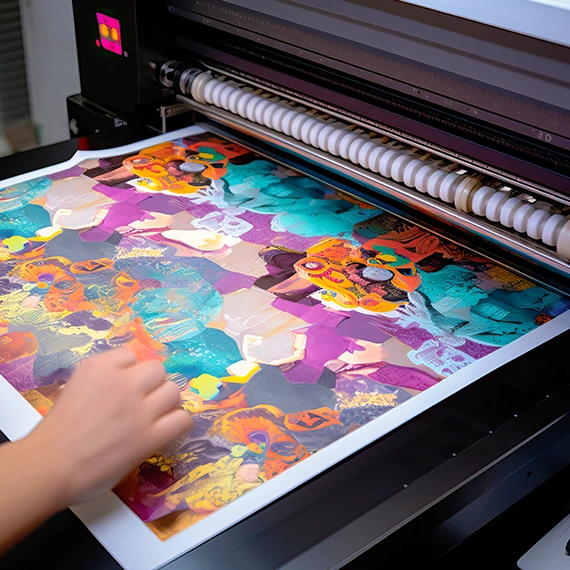

Precision and Scale
The flexibility of digital printing
Rapid turnaround projects
Without the need for plates, jobs are sent directly from a computer to the printer, dramatically reducing setup time.
Variable data integration
Each piece can be customized with unique names, addresses, or codes, ideal for personalized direct mail marketing campaigns.
Cost-effective short runs
Printing the exact quantity needed, from one to a few hundred copies, minimizes both material waste and upfront investment.
On-demand execution
Creating visual impact with large formats
Wide-format inkjet printers handle materials that standard machines simply cannot, producing everything from indoor posters to durable outdoor signage. The technology uses specialized inks, including UV-cured variants, to ensure vibrancy and weather resistance on different surfaces.
Substrates range from flexible vinyl and canvas to rigid materials like foam board, acrylic, and corrugated plastic, suiting diverse advertising or decorative needs.

Event banners and signage
Vinyl banners for outdoor promotions or interior signs printed directly onto rigid substrates.

Trade show display systems
Pop-up backdrops, retractable banners, and informational panels that are portable and easy to assemble.

Architectural and vehicle wraps
Adhesive vinyl graphics applied to building facades or company vehicles for high-visibility branding.

Fine art and Canvas prints
High-resolution reproductions of photographs or artwork on textured canvas for galleries or decor.
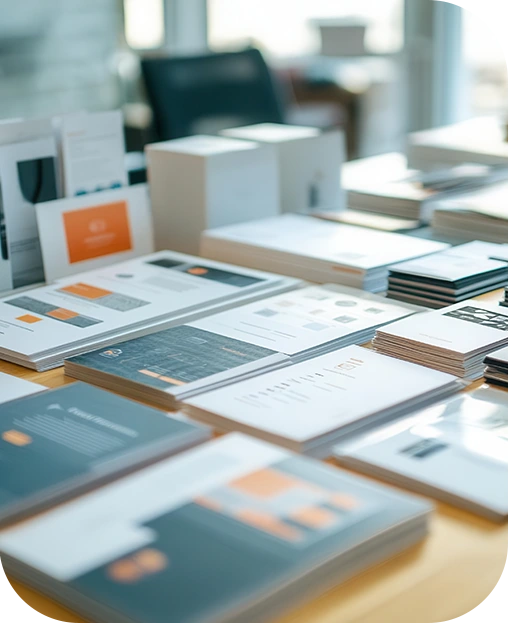
Expansive visuals
Foundations of corporate identity: business stationery
A cohesive set of stationery establishes professionalism and reinforces brand identity with every correspondence or introduction exchanged with clients.
This category encompasses essential items like business cards, which serve as a primary networking tool, and official letterheads used for contracts, invoices, and formal communications. Branded envelopes complete the package, ensuring a consistent brand presentation from the moment a document is received. The choice of paper stock, from textured to smooth finishes, adds a tactile quality.
Consistency in colour, typography, and logo placement across all elements is critical. It projects a stable and detail-oriented image of an organization, building trust and recognition over time through repeated visual and physical contact with the brand’s core assets.
Developing tangible advertising materials
Physical media outreach
Engaging audiences with printed collateral

Informational brochures and flyers
Multi-panel brochures detailing services or single-sheet flyers announcing events, designed for wide distribution.

Detailed product catalogues
Bound publications that showcase an entire product line with images, specifications, and organized layouts.

Direct mail postcards
Targeted promotional pieces sent through the mail system to reach specific customer demographics directly.
Marketing in hand
The importance of professional finishing and binding
The final touches transform printed sheets into a polished, durable, and functional product.
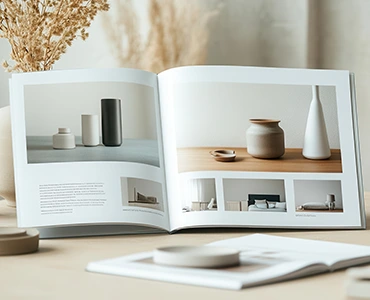
Protective coatings and lamination
Applying a matte or gloss laminate film protects against moisture and wear while enhancing visual depth.
This process adds a layer of durability to frequently handled items like menus or covers.
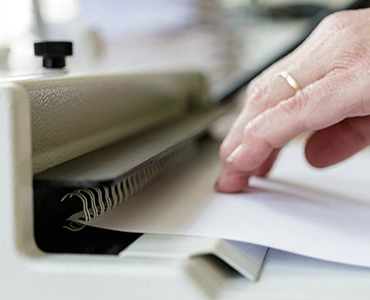
Binding methods for documents
Techniques like saddle-stitching for booklets, perfect binding for books, and coil or wire-o for manuals.
Each method offers a different level of durability and functionality for the final document.
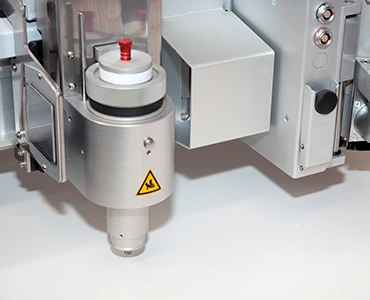
Custom shaping with die-cutting
A custom-made die cuts paper into unique shapes for pocket folders, custom packaging, or distinct designs.